
Ptosis: When a Drooping Eyelid Is a Medical Problem
Blepharoptosis narrows the field of vision and tires the forehead — and its evaluation looks very different from a cosmetic fold consultation.
Ptosis, known medically as blepharoptosis, describes an upper eyelid that sits lower than it should even when a person tries to open the eyes fully. It can be present from birth or develop with age as the levator muscle or its tendon stretches and weakens.
The distinction matters because a droopy lid is not simply an aesthetic issue. When the lid margin covers part of the pupil it can shrink the upper visual field, and the fix is different from creating a double eyelid crease.
Signs the droop is functional
Common clues include chronically raised eyebrows, horizontal forehead lines from constant compensation and a habit of lifting the chin to see. People may also report heavy lids late in the day, difficulty reading or one eye that looks noticeably smaller in photographs.
In children, a drooping lid deserves prompt evaluation because a covered pupil during visual development can contribute to amblyopia, or lazy eye. In adults, a droop that appears suddenly or affects one side only should be checked to rule out nerve or muscle disorders before any cosmetic discussion.
How clinicians measure it
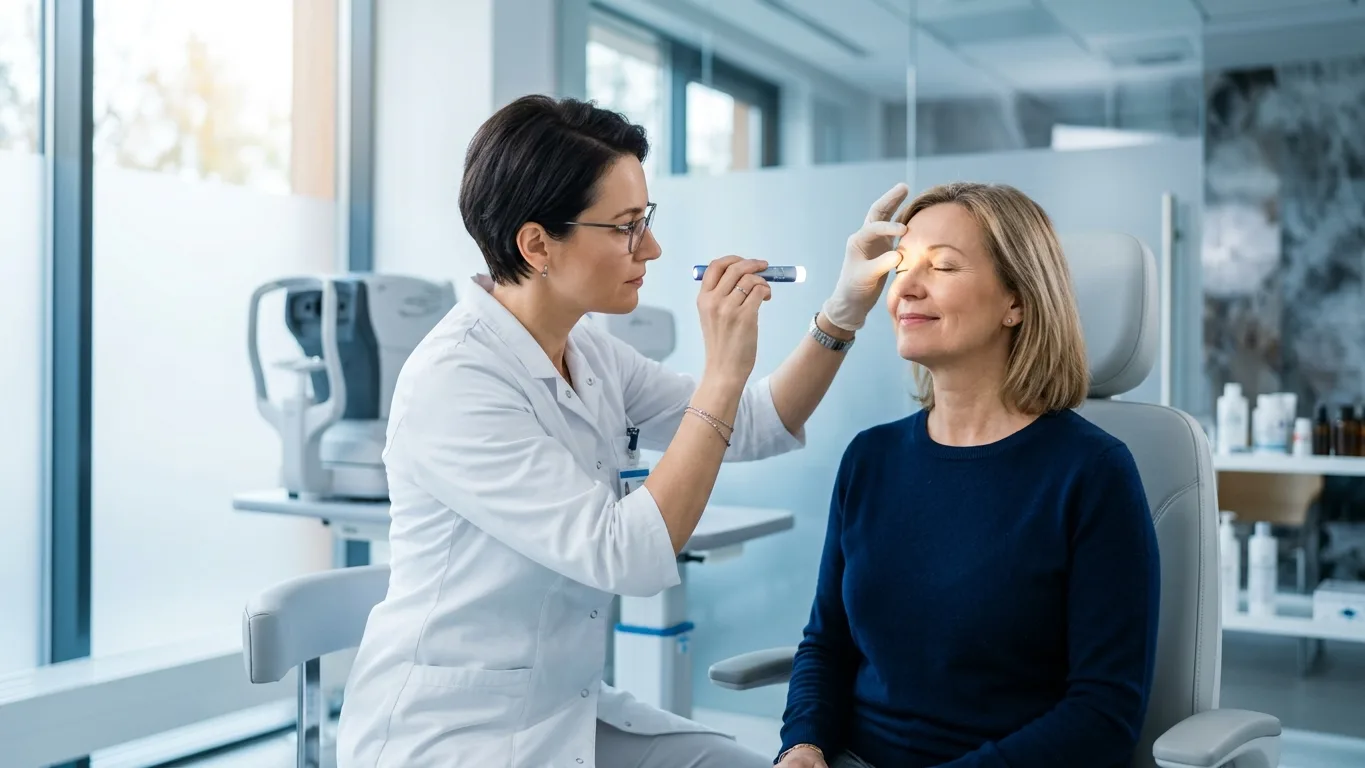
Evaluation centers on two measurements: how high the lid margin sits relative to the pupil, and how far the lid travels from downgaze to upgaze while the brow is held still. The second value, called levator function, tells the surgeon whether the lifting muscle can be tightened or whether it must borrow power from the forehead muscle.
Clinicians may also test whether stimulating a small supporting muscle lifts the lid, photograph the eyes in different gazes and, when coverage or severity is in question, document the visual field. The workup separates true ptosis from look-alikes such as excess skin draping over the lashes or a brow that has descended with age.
Why it is not a fold request
A double eyelid operation repositions skin to shape a crease; ptosis repair adjusts the lifting mechanism so the lid margin itself rises. Performing a crease procedure on an eye with untreated ptosis can leave a tired look, which is why eye opening correction and crease formation are sometimes planned together.
Results vary with muscle condition and healing, so individual variation is significant, and the recovery period often includes temporary difficulty closing the eyes at night. There is also a possibility of side effects such as undercorrection, overcorrection and dry eye, which is why a consultation with a board-certified specialist in oculoplastic or plastic surgery should precede any decision.
Self-check before you book
- In a relaxed mirror gaze, note whether your upper lid covers part of the pupil.
- Compare old photos to see when the droop began and whether one side leads.
- Notice forehead effort — raised brows or fatigue after visually demanding work.
- List medications and conditions, since some neuromuscular disorders mimic ptosis.
- Prepare to ask what your levator function result means for technique choice.
MediIndex articles are for general information only and are not medical advice, diagnosis, or advertising. Outcomes vary by individual — consult a board-certified specialist for personal decisions.