No-Prep Veneers: When Almost No Enamel Removal Is Possible
Ultra-thin ceramic shells can sometimes be bonded with little or no drilling, but the approach fits a narrower range of teeth than its name suggests.
No-prep and minimal-prep veneers promise a version of smile design that leaves most of the natural tooth untouched. Instead of removing a visible layer of enamel, the dentist bonds an ultra-thin ceramic shell directly onto a lightly polished surface. For patients anxious about drilling, the appeal is obvious.
Yet the technique is not a shortcut that works for every mouth. Tooth position, color and gum contour determine whether added ceramic will look natural or bulky, and those factors vary widely between individuals. Whether almost no enamel removal is truly possible is a case-by-case judgment that requires an in-person consultation with a dentist.
What no-prep actually involves
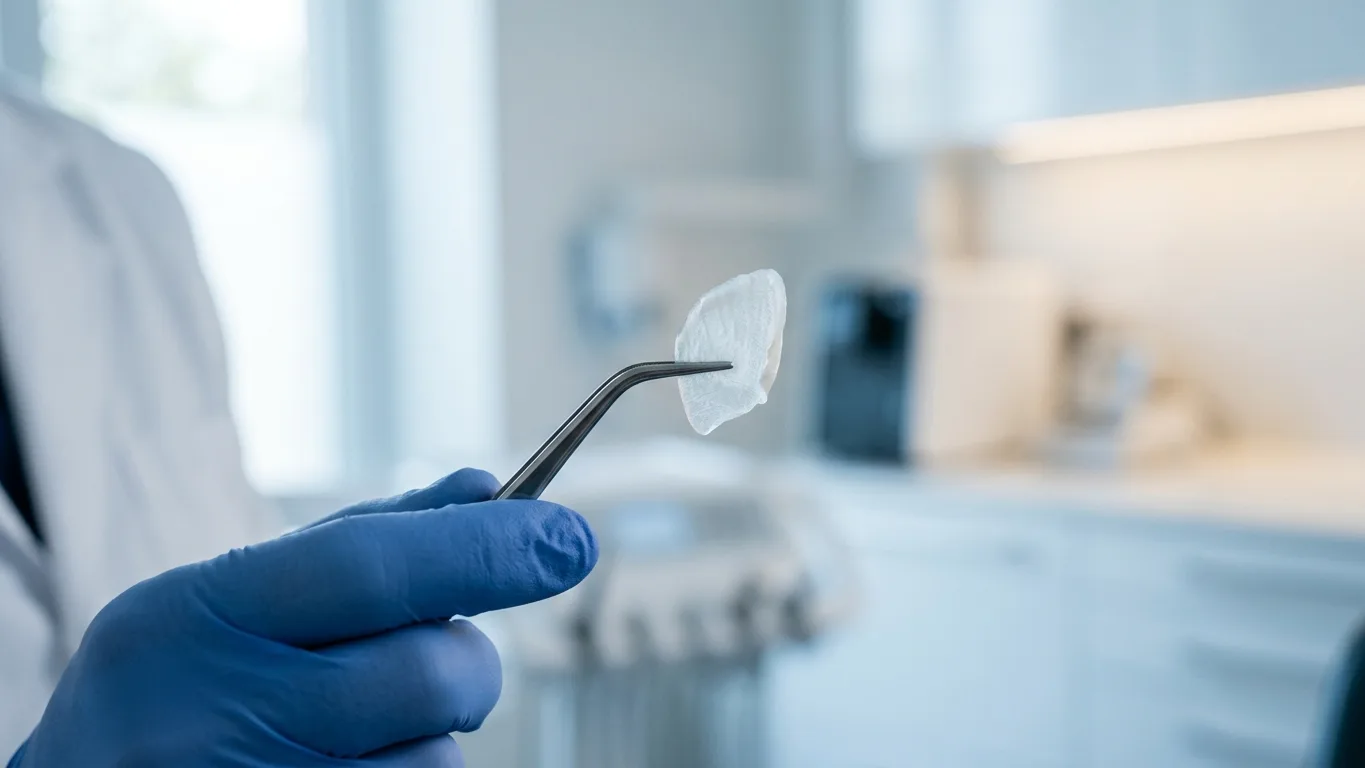
No-prep is less a single technique than one end of a spectrum. At the conservative extreme the dentist only cleans and lightly polishes the enamel before bonding, while minimal-prep cases remove a fraction of a millimeter in selected spots. The ceramic itself is thinner than a conventional veneer, in some cases approaching the thickness of a contact lens.
Because the shell is added on top of the existing tooth, the finished surface sits slightly farther forward than before. Careful planning hides that difference, but it remains the central design constraint of the approach. It also explains why case selection matters more here than in conventional veneer work.
Teeth that suit the approach — and teeth that don’t
The technique tends to work on teeth that are small, worn short or slightly spaced, where adding volume restores rather than exaggerates. Patients whose enamel is already thin from erosion may also be candidates, since there is little to spare in the first place. In these mouths ceramic can rebuild contour without the tooth ever meeting a drill in a meaningful way.
Dark, rotated or forward-leaning teeth are a different story. Masking deep discoloration through very thin ceramic is difficult, and adding material to an already prominent tooth pushes it further out. In such cases a dentist will usually recommend conventional preparation, or a different treatment entirely, after examining the bite and gum line in person.
The reversibility question
No-prep veneers are often described as reversible, and compared with conventional preparation the claim has substance — the underlying tooth keeps its enamel. Still, removal later would mean grinding off bonded ceramic and resin, a careful procedure of its own. Reversible is better read as less irreversible.
Life with the finished veneers also involves a settling-in phase. Speech and lip feel can be unfamiliar during an adaptation period of days to weeks, temporary sensitivity is possible, and complications such as debonding or edge chipping remain possible over time, with individual variation in how teeth respond. Regular follow-up visits let the dentist catch and manage these issues early.
Before your consultation
- Ask whether your tooth position and color realistically allow a no-prep or minimal-prep approach.
- Ask to see a wax-up or digital preview showing how added ceramic would change your profile.
- Confirm how the slightly thicker margins near the gum line should be kept clean.
- Ask what removing the veneers later would involve if you ever changed course.
- Discuss grinding or clenching habits, which affect thin ceramic more than thicker restorations.
MediIndex articles are for general information only and are not medical advice, diagnosis, or advertising. Outcomes vary by individual — consult a board-certified specialist for personal decisions.