
How Porcelain Veneers Work: The Science Behind the Bond
A thin ceramic shell, a finely prepared enamel surface and a light-activated adhesive together explain why veneers stay on for years.
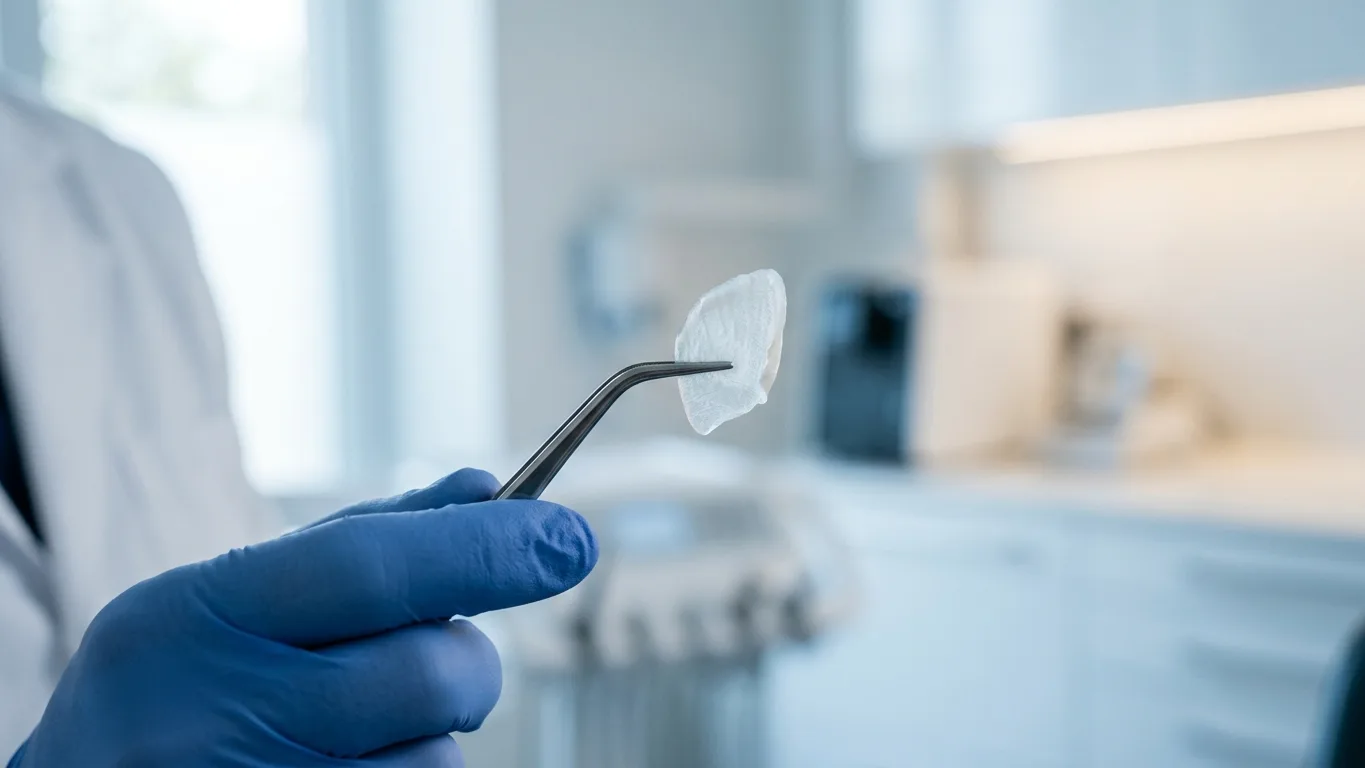
Porcelain laminate veneers are wafer-thin ceramic shells bonded to the front surface of teeth to change their color, shape or apparent alignment. Unlike crowns, which cover the entire tooth, veneers rely on an adhesive bond to a thin layer of prepared enamel. That bond — not mechanical retention — is what keeps them in place.
Understanding how much enamel is removed, and how the ceramic is chemically joined to the tooth, helps patients weigh what is for most people a lasting and partly irreversible decision. Because tooth anatomy and enamel thickness vary from person to person, the same technique can produce different results in different mouths.
A fraction of a millimeter of enamel
Conventional veneer preparation removes a thin layer of enamel from the front of the tooth, generally well under a millimeter. The goal is to create room for the ceramic so the finished tooth does not look or feel bulky. Dentists aim to stay within enamel, because bonds to enamel are stronger and more predictable than bonds to the softer dentin underneath.
How much enamel a tooth can spare varies with age, wear and prior treatment — another reason preparation depth is planned case by case. After preparation and bonding, teeth can be sensitive to hot and cold for a while, and speech or bite may feel unfamiliar during an adaptation period of days to a few weeks.
The chemistry that holds a veneer on
Bonding is a multi-step chemical process rather than simple gluing. The inner surface of the porcelain is etched and treated with a coupling agent so resin can grip the ceramic, while the enamel is acid-etched to create a microscopically rough surface. A thin layer of resin cement then flows into both surfaces and hardens under a blue light, locking the veneer in place.
Every step depends on keeping the tooth dry and uncontaminated, which is why dentists isolate the area so carefully during cementation. Even with a sound protocol the bond is strong but not indestructible — debonding and edge chipping remain possible complications over the years, and grinding habits raise that risk.
Minimal-prep versus conventional veneers
Minimal-prep and so-called no-prep veneers reduce or nearly eliminate enamel removal, preserving more natural tooth. They suit teeth that are small, worn or slightly spaced, where adding ceramic does not create bulk. On teeth that are dark, crowded or prominent, however, skipping preparation can leave veneers looking thick or opaque.
Neither approach wins across the board — the right choice depends on enamel thickness, bite forces and the change being sought, all of which differ between individuals. An in-person consultation with a dentist, including X-rays and a bite assessment, is needed to determine which technique fits a particular case.
Before your consultation
- Ask how much enamel would be removed from each tooth and whether the preparation stays within enamel.
- Ask whether a minimal-prep technique is realistic for your tooth shape and color goals.
- Tell the dentist about grinding, clenching or nail-biting habits before planning starts.
- Ask what temporary sensitivity to expect and how long the adaptation period usually runs.
- Ask how a debonded or chipped veneer would be handled years down the line.
MediIndex articles are for general information only and are not medical advice, diagnosis, or advertising. Outcomes vary by individual — consult a board-certified specialist for personal decisions.