Not Everyone Is a Veneer Candidate. Here Is Who Should Wait
Grinding, thin enamel, gum disease and untreated decay can turn veneers into a short-lived fix — screening comes before smile design.
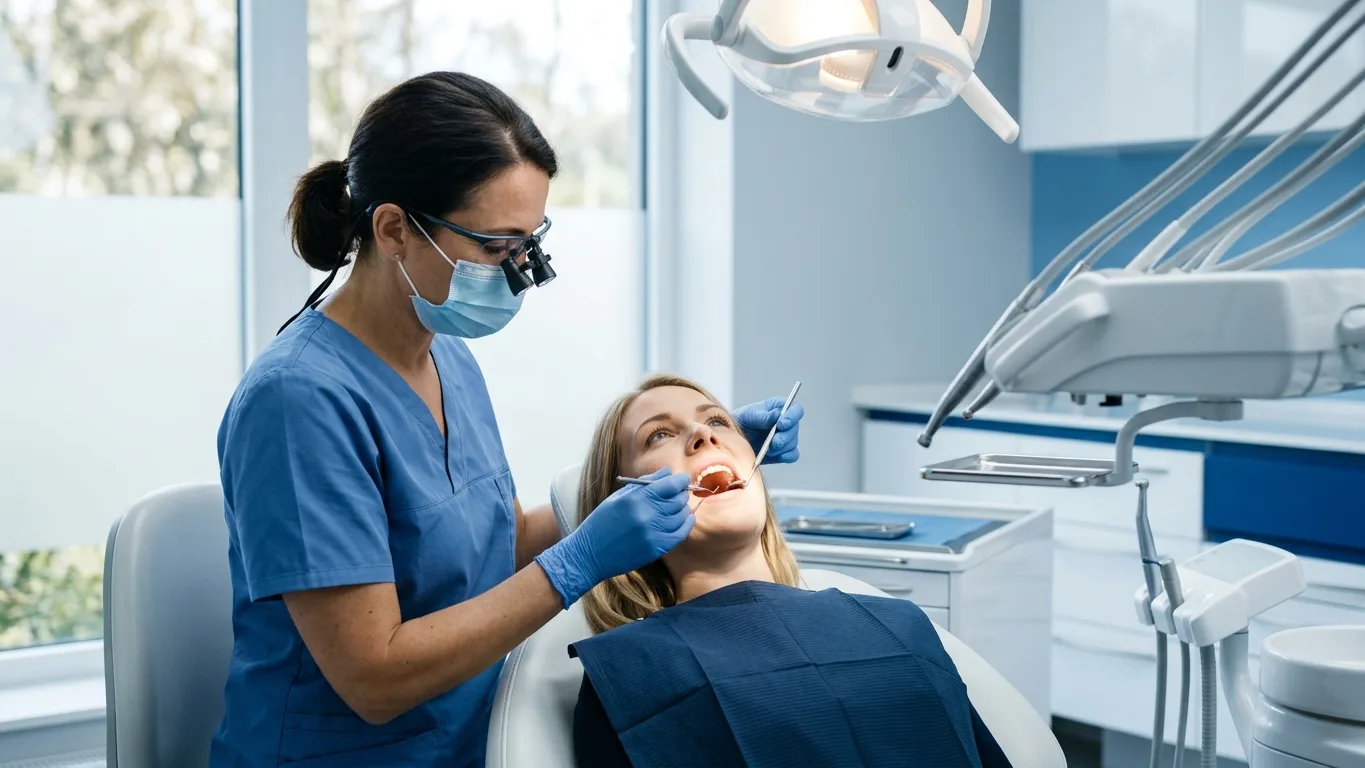
Veneers are frequently marketed as a fast route to a new smile, but dentists screen candidates as carefully as they design the result. A veneer bonded onto the wrong foundation — inflamed gums, weakened enamel, an unmanaged grinding habit — is a restoration set up to fail early.
Few of the common disqualifiers are permanent. Most are conditions to treat first, after which candidacy can be reassessed. Because enamel thickness, gum health and bite forces vary between individuals, this judgment is made case by case rather than from a checklist alone.
Bruxism: the bite that breaks ceramic
Grinding and clenching, known as bruxism, can load teeth with forces far beyond normal chewing. Porcelain tolerates ordinary bites well but is brittle under repeated overload, so unmanaged bruxism is a leading reason veneers chip or come loose. Many people grind only in their sleep and learn of it when a dentist spots flattened edges or jaw-muscle tenderness.
Bruxism is rarely an automatic exclusion, but it needs to be addressed before ceramics go on. A bite evaluation and a custom night guard can bring the risk down to a level many dentists accept. Proceeding without that step invites a cycle of chipping, debonding and repair — complications that are possible for anyone but far more likely here.
When the enamel itself is the problem
Veneer retention depends on bonding to enamel, and some teeth simply do not have enough of it. Acid erosion, heavy wear, large fillings and previous drilling all shrink the bondable surface. When most of the bond would rest on softer dentin, retention weakens and debonding becomes more likely.
For heavily restored or badly worn teeth, a crown that wraps the tooth may be a sounder choice than a veneer. When erosion is active — from reflux or an acidic diet — the cause needs treatment first, or new ceramic will sit on a dissolving foundation. How much enamel remains cannot be judged in a mirror; it takes an exam and X-rays.
Gums and decay come first
Inflamed, bleeding gums make precise impressions and clean bonding difficult, and gum disease that progresses after treatment can expose veneer margins as tissue recedes. Untreated decay is a firmer stop: cavities have to be restored before any cosmetic work, or the ceramic will seal in a growing problem. In both cases the sequence is treat, stabilize, then reassess candidacy.
Even people who clear every hurdle should expect the treatment to be a process, not a moment. Transient sensitivity is common after preparation, bite and speech need an adaptation period, and complications such as debonding remain possible over time — outcomes also vary between individuals. Whether veneers are appropriate at all is a judgment that needs an in-person consultation with a dentist, not a self-diagnosis.
Candidacy self-check before you book
- Have you been told you grind or clench, or do you wake with jaw soreness or flattened tooth edges?
- Do your gums bleed when brushing or flossing — a sign to treat gum health first?
- Have large fillings, erosion or previous dental work reduced the enamel on the teeth you want treated?
- Is there any decay or an old restoration your dentist has flagged but not yet treated?
- Are you prepared for follow-up visits and, if advised, a night guard after treatment?
MediIndex articles are for general information only and are not medical advice, diagnosis, or advertising. Outcomes vary by individual — consult a board-certified specialist for personal decisions.