Chipped or Loose Veneer: When to Repair, When to Replace
Not every damaged veneer needs to come off — the right call depends on where the damage sits, why it happened and how much enamel is left underneath.
Ceramic veneers fail in two typical ways: a chip or crack in the porcelain, or a clean debond in which the shell separates from the tooth. The two events look similar to a worried patient but lead to very different treatment decisions. A small edge chip may be polished or patched in one visit, while a fractured or repeatedly loosening veneer usually points toward replacement.
What matters as much as the fix is the diagnosis behind it. A veneer rarely fails without a reason — a heavy bite, a grinding habit, decay at a margin or a bonding problem — and repairing the ceramic without addressing the cause invites the same failure again. That investigation happens chairside, in person, not over a photo.
When a repair is realistic
Small, shallow chips at the biting edge can often be smoothed and polished so the tooth looks and feels intact, with no material added at all. Slightly larger defects may be patched with tooth-colored composite resin bonded onto the roughened porcelain surface. Composite patches are a workable mid-term fix, though they can stain and wear differently from the surrounding ceramic over time.
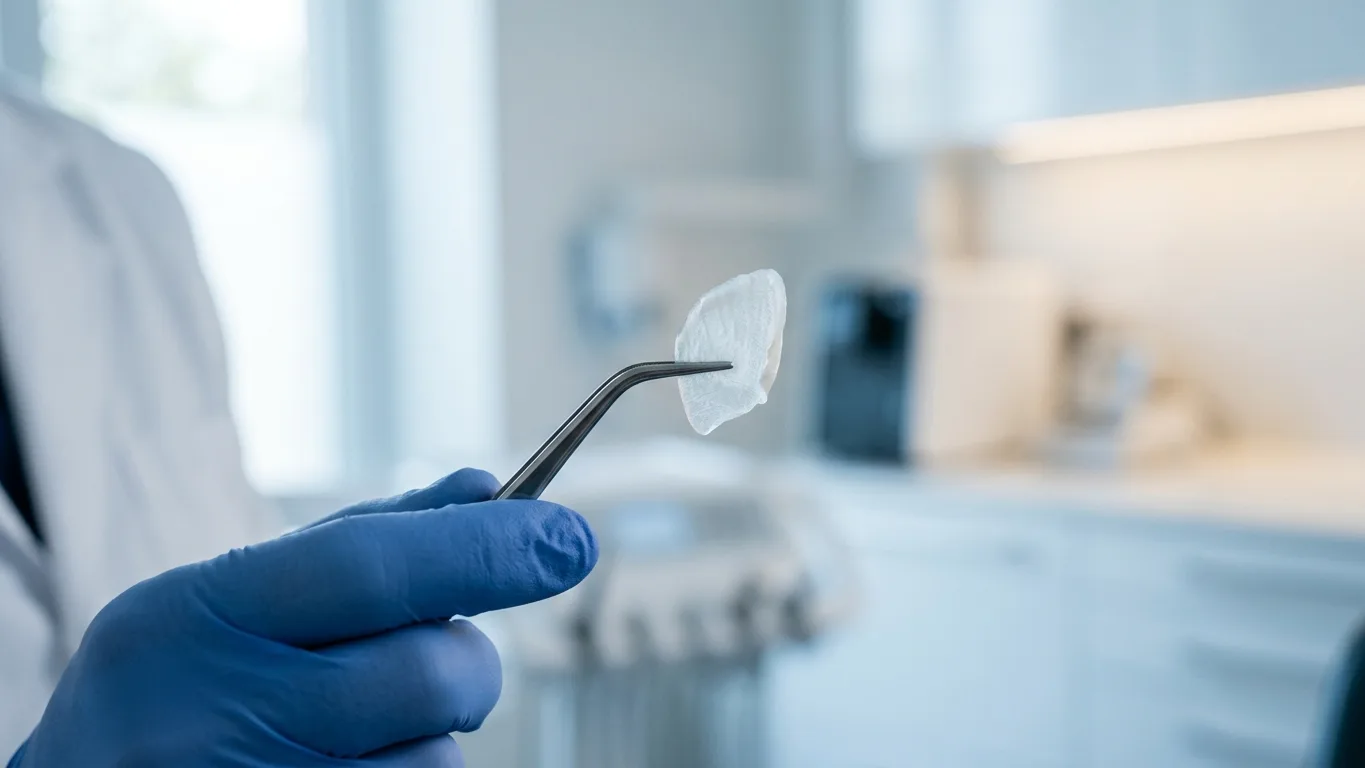
A veneer that debonds in one piece, with the ceramic and the tooth both undamaged, can sometimes be cleaned and rebonded — one reason dentists tell patients to keep the shell and avoid gluing it back themselves. Household adhesives contaminate both surfaces and can turn a salvageable veneer into a lost one.
When replacement is the sounder call
A crack running through the body of the veneer, a chip that exposes a large area of tooth, decay creeping under a margin or a veneer that has debonded more than once all argue for replacement. Repairs in these situations tend to be short-lived, and a leaking margin can quietly damage the tooth underneath while a cosmetic patch hides the problem.
Replacing a veneer means grinding off the old ceramic under magnification without cutting deeper into the tooth, then repeating impressions, laboratory work and bonding. It is more involved than the first placement, and each cycle tests how much enamel remains — which is why dentists weigh replacement carefully rather than defaulting to it.
Deciding well the second time
Before agreeing to either path, patients should understand why the first veneer failed and what will change this time — a bite adjustment, a night guard, a different margin design or a different material. Outcomes vary between individuals, and complications such as sensitivity, debonding or gum irritation remain possible after any redo, so the plan should name the cause, not just the fix.
A freshly repaired or replaced veneer also needs its own adaptation period — bite and speech can feel unfamiliar for days to weeks, and a follow-up visit lets the dentist fine-tune contacts. An in-person consultation with a dentist, ideally with X-rays of the affected tooth, is the place to weigh repair against replacement.
Before your consultation
- If a veneer comes off whole, keep it clean and dry and bring it to the appointment.
- Never re-attach a veneer with household glue — it can ruin both surfaces.
- Ask what caused the failure and what will change to prevent a repeat.
- Ask how much enamel remains and whether another veneer is still a good option.
- Ask how long a composite repair is expected to hold compared with a new veneer.
MediIndex articles are for general information only and are not medical advice, diagnosis, or advertising. Outcomes vary by individual — consult a board-certified specialist for personal decisions.