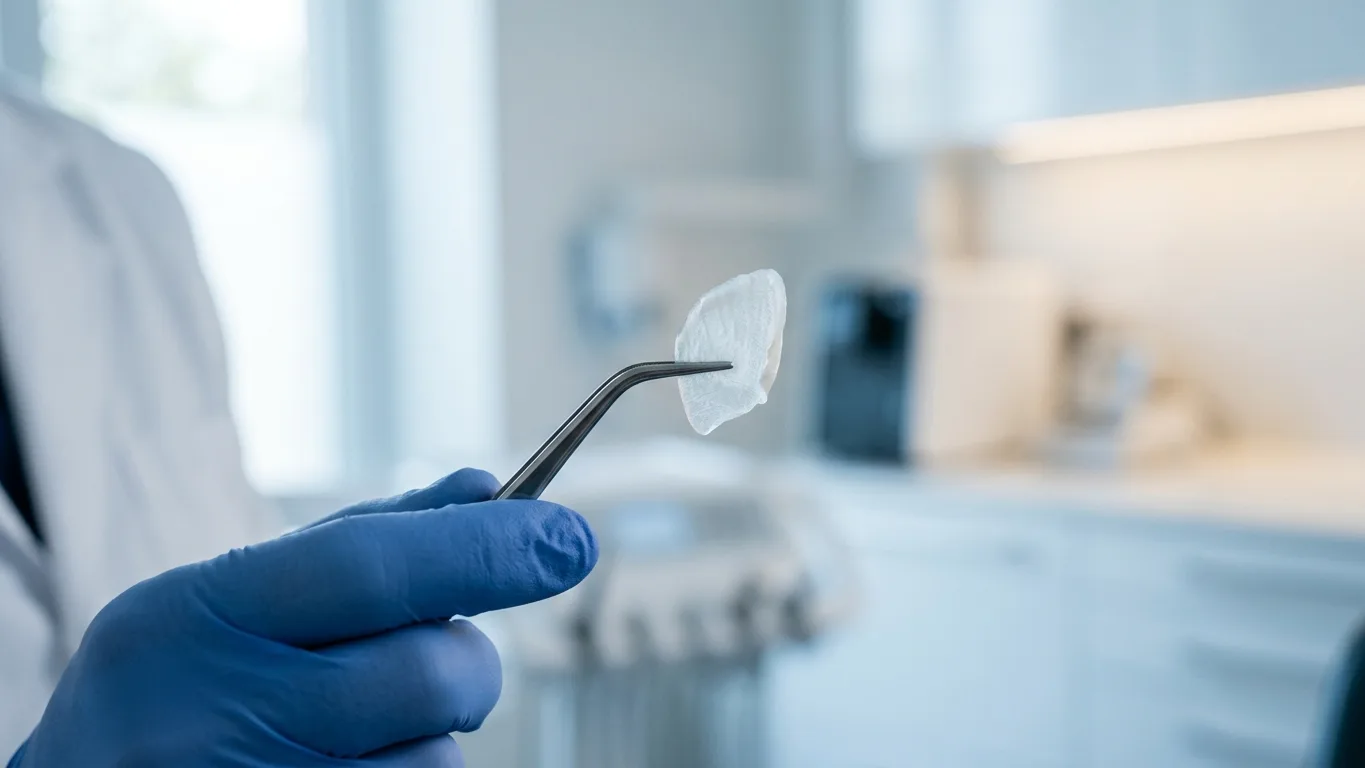
The Single-Tooth Veneer: Dentistry’s Toughest Matching Job
Veneering one front tooth to blend invisibly with its natural neighbor is widely considered harder than veneering a whole smile.
It sounds like the easy version of the treatment: one discolored or chipped front tooth, one veneer. In practice, many dentists describe the single central incisor as the most demanding case in cosmetic dentistry. When six or eight teeth are veneered together, the ceramist controls the whole color scheme; with one tooth, the new veneer must imitate a living neighbor in every detail.
Natural teeth are not one color. They grade from a warmer neck to a translucent edge, carry faint white flecks and hairline textures, and change appearance with the light. Reproducing that behavior in a wafer of ceramic, on the most visible tooth in the mouth, is where technique, laboratory artistry and patient patience are tested together.
Why one tooth is harder than eight
The human eye is ruthless about symmetry in the front of the mouth: the two central incisors sit side by side, and even a slight mismatch in shade, translucency or surface luster between them is noticeable in conversation distance. A full set of veneers only has to be internally consistent; a single veneer has to pass a side-by-side comparison with nature all day, in every light.
The underlying tooth adds another variable. Veneer ceramic is thin enough that the color beneath shows through, so the same shell can look different on a dark tooth than on a bright one. Tooth color, enamel thickness and gum framing all vary between individuals, which is why no two single-tooth cases are planned the same way.
How dentists and ceramists chase a match
A serious attempt at a single-tooth match starts with shade mapping: the neighboring tooth is photographed with shade tabs under controlled light, sometimes with the teeth hydrated, since teeth lighten temporarily as they dry during treatment. The ceramist then layers different porcelain powders — body, enamel and translucent effects — rather than pressing a single uniform color.
Before final bonding, the veneer is checked in the mouth with try-in pastes that preview how the cement shade will shift the final color. Some cases go back to the laboratory for staining adjustments once or twice, and in demanding situations the ceramist may see the patient directly. The extra appointments are not a sign of failure; they are how close matches are made.
Setting expectations honestly
Even excellent single-tooth work aims for a match so close that no one looks twice — not for a veneer that is identical to nature under every possible light. Patients should also know the alternatives discussed in these cases, such as veneering the two central incisors together for symmetry, and the trade-off that this treats an additional healthy tooth. Complications such as sensitivity or debonding remain possible here as in any veneer case.
A provisional restoration and an adaptation period of days to weeks are part of the process, and the final look should be judged after the gum has settled around the new margin. An in-person consultation with a dentist — with photos, shade assessment and a frank talk about achievable results — is the only reliable way to know whether a single-tooth veneer suits a particular smile.
Before your consultation
- Ask how the shade of the neighboring tooth will be recorded and communicated to the lab.
- Ask whether a try-in step is planned before the veneer is finally bonded.
- Ask how many adjustment visits a close match typically takes in cases like yours.
- Discuss the alternative of treating both central incisors and its trade-offs.
- Agree in advance on how the result will be judged once the gum has settled.
MediIndex articles are for general information only and are not medical advice, diagnosis, or advertising. Outcomes vary by individual — consult a board-certified specialist for personal decisions.