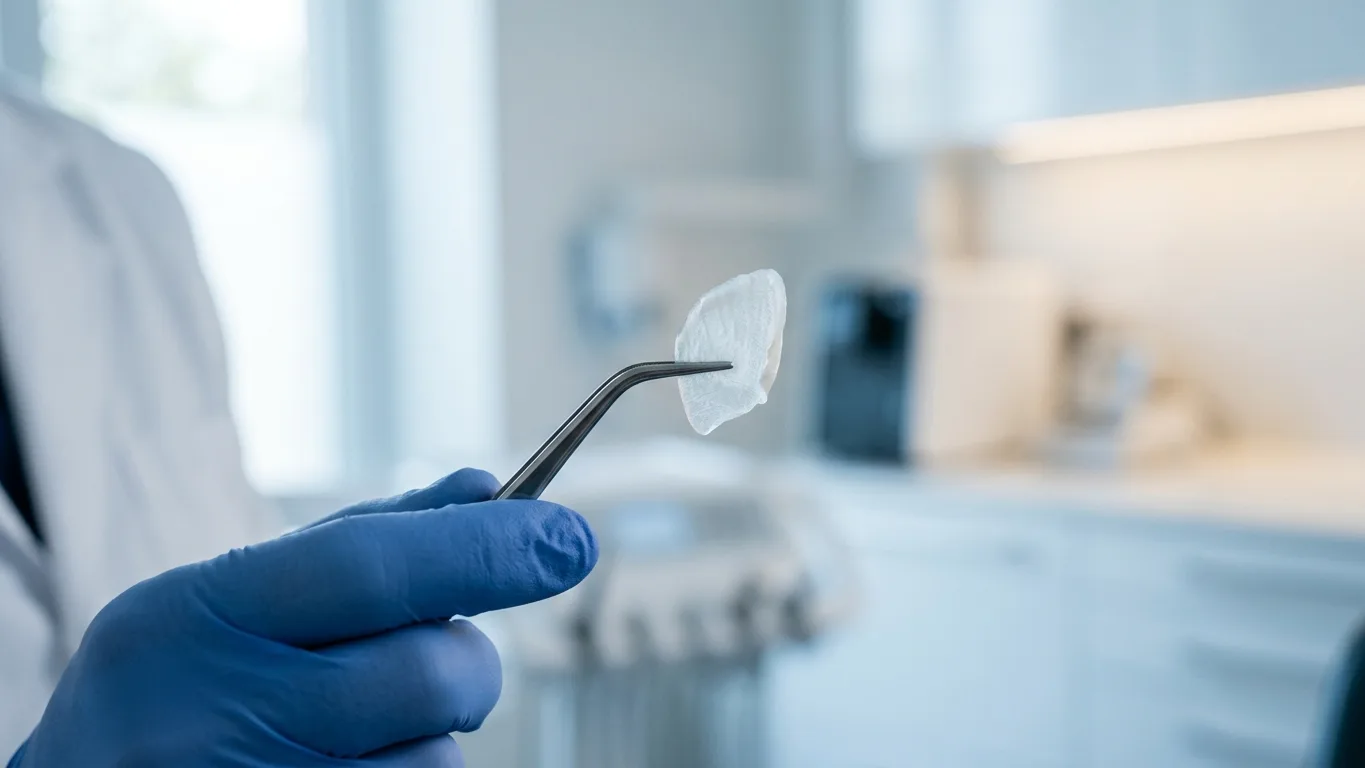
Veneer Materials Compared: Feldspathic, Disilicate, Zirconia
Strength and translucency pull in opposite directions in ceramic, and each veneer material settles that tension at a different point.
Behind every veneer case is a materials decision that patients rarely see. Feldspathic porcelain, lithium disilicate and zirconia are the three ceramics most often discussed, and they sit at different points on a single axis: the stronger the ceramic, generally the less light passes through it. Natural enamel, the benchmark, is both translucent and resilient — a combination ceramics can only approximate.
No material wins on every count, and the right pick depends on tooth color, bite forces, veneer thickness and the laboratory’s strengths — variables that differ between individuals. Understanding the trade-offs makes the conversation at an in-person consultation with a dentist far more productive.
Feldspathic porcelain: the artisan option
Feldspathic porcelain is the traditional veneer ceramic, built up by a technician in thin layers of powder and liquid, then fired. Layering lets the ceramist embed subtle gradients, halos and translucency that mimic how light moves through natural enamel. For thin veneers on front teeth, its optical range remains a reference point.
The cost of that beauty is fragility before bonding. Feldspathic shells are the weakest of the three in raw strength and depend heavily on a sound adhesive bond to enamel for their durability in the mouth. They also lean on the individual technician’s skill more than pressed or milled ceramics do.
Lithium disilicate: the middle path
Lithium disilicate is a glass-ceramic that is pressed or milled and then crystallized, giving it markedly higher strength than feldspathic porcelain while keeping much of the translucency veneers need. Its glassy matrix can be etched, so it bonds in the way veneer work demands. That balance has made it a common first choice in many practices.
It is not without limits. Very dark underlying teeth can show through unless the ceramic is made more opaque, which dims the lifelike quality, and heavy grinding still stresses any glass-ceramic. As with every material here, longevity is discussed in general terms and depends on bite, habits and maintenance.
Zirconia, and how the three are chosen
Zirconia is the strongest of the three and resists fracture even in thin sections, which is why it appears in cases with heavy bite forces or severe grinding. Its historical weakness was opacity; newer, more translucent formulations narrow the gap but trade away some strength to do so. Bonding to zirconia also requires different surface treatments than glass-ceramics.
In practice the dentist matches material to mouth: optics-first ceramics where light handling matters most, strength-first ceramics where forces dominate — and the right answer varies between individuals, sometimes between teeth. Whatever is chosen, expect an adaptation period after bonding, and remember that sensitivity, debonding or chipping remain possible complications regardless of material.
Before your consultation
- Ask which material is proposed for your case and why it fits your bite and tooth color.
- If you grind or clench, ask how that changes the material recommendation.
- For dark underlying teeth, ask how masking will be handled without losing translucency.
- Ask which laboratory makes the veneers and which materials it works with most.
MediIndex articles are for general information only and are not medical advice, diagnosis, or advertising. Outcomes vary by individual — consult a board-certified specialist for personal decisions.