Veneers or Crowns: Coverage, Enamel Cost and How to Choose
The two restorations solve overlapping problems in different ways, and the deciding factor is usually how much healthy tooth each one asks you to give up.
Veneers and crowns are often discussed as rivals, but they are better understood as tools with different coverage. A veneer is a thin shell bonded mainly to the front surface of a tooth; a crown is a cap that wraps the whole visible tooth. That structural difference drives nearly every other trade-off between them.
Which one fits a given tooth depends on how much sound structure remains, how the bite loads it and what change is being sought — factors that vary between individuals and even between neighboring teeth. The comparison below frames the questions; an in-person consultation with a dentist, with X-rays in hand, settles them.
Coverage: a shell versus a cap
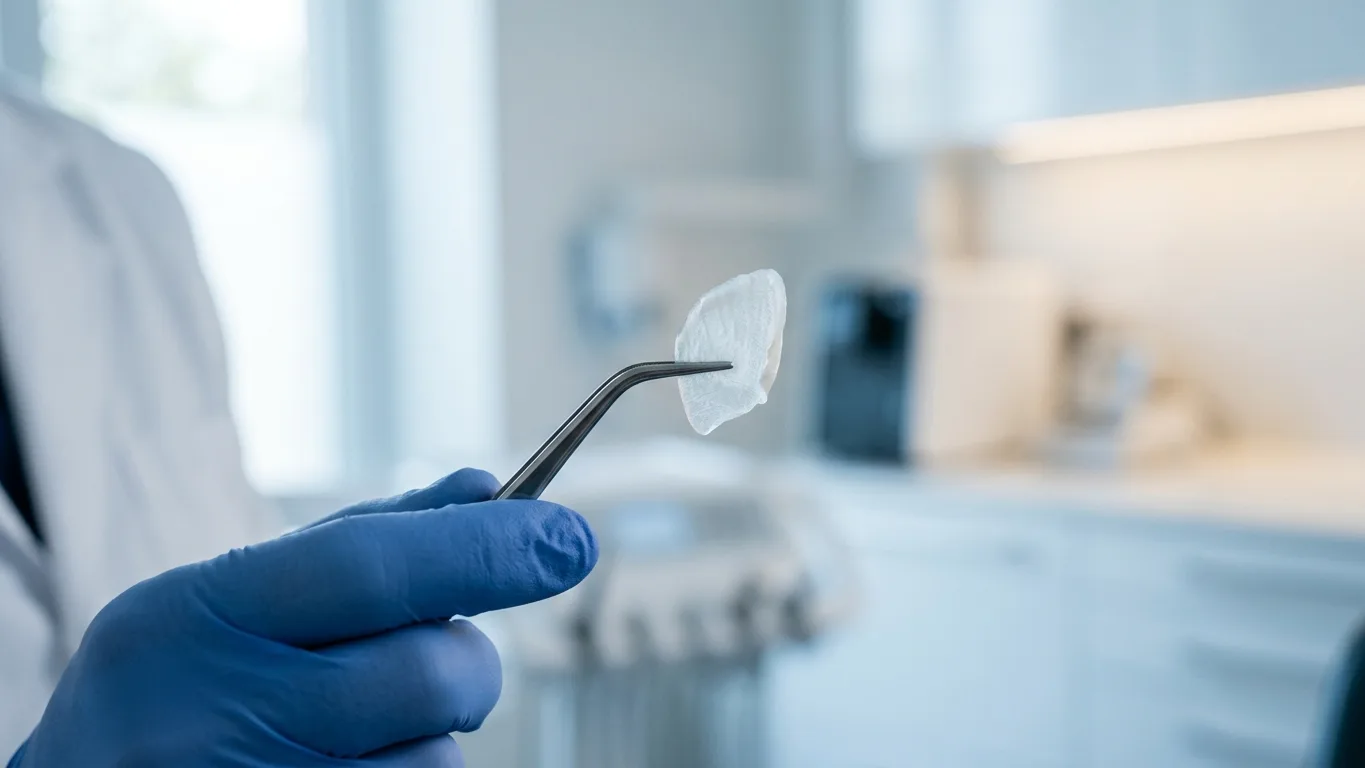
A veneer covers the front face of a tooth and usually a sliver of the biting edge, leaving the back and sides largely untouched. A crown replaces the entire outer surface, encircling the tooth above the gum line. Because it wraps the tooth, a crown can hold together structure that a veneer could only decorate.
Coverage also changes how each restoration holds on. Veneers depend chiefly on the adhesive bond to enamel, while crowns add mechanical retention from their shape. Both approaches are well established; the question is which one a particular tooth actually needs.
The enamel ledger
The price of coverage is tooth structure. Veneer preparation removes a thin front layer, generally staying within enamel; crown preparation reduces the tooth on all sides to make room for the cap, which costs substantially more structure. Enamel does not grow back, so this is the least reversible part of either decision.
This ledger explains the usual guidance: preserve structure when a tooth is largely intact, spend it when a tooth is already compromised. Grinding a healthy front tooth down for a crown purely for looks trades away enamel a veneer would have kept. On a weakened tooth, the same reduction is an investment in survival rather than a loss.
When each is the right call
Veneers suit front teeth that are structurally sound but discolored, worn at the edges, slightly spaced or mildly irregular. Crowns come into their own when a tooth has large fillings, a fracture, a root canal or heavy bite loads — situations where wrap-around protection matters more than conserving the front surface. Many smile plans mix the two, tooth by tooth.
Neither option ends the story at cementation. Both involve an adaptation period while speech and bite settle over days to weeks, both can bring temporary sensitivity, and complications such as debonding, chipping or gum irritation remain possible over the years — with individual variation in risk. How long either restoration lasts depends on habits, bite and maintenance, and is discussed in general terms rather than promised.
Before your consultation
- Ask how much sound tooth structure each option would remove from your specific teeth.
- Ask whether any tooth in the plan has fillings, cracks or root canal history that favors a crown.
- Discuss whether a mixed plan — veneers on some teeth, crowns on others — fits your case.
- Ask how your bite and grinding habits affect the choice and the long-term risks.
MediIndex articles are for general information only and are not medical advice, diagnosis, or advertising. Outcomes vary by individual — consult a board-certified specialist for personal decisions.