Vomiting and Diarrhea in Dogs: When It’s Time to Call the Vet
A single upset stomach and a brewing emergency can look alike at first, so veterinarians draw the line with a short list of red flags rather than wishful waiting.
Almost every dog vomits or has loose stool at some point, and most episodes pass as quickly as they came. The hard part for owners is that the opening scene of a harmless upset and the opening scene of a poisoning, an obstruction or a serious infection can look identical. What separates them is rarely the first vomit—it is what happens in the hours that follow, and who is doing the watching.
Home observation has a legitimate but narrow role. A bright, hydrated adult dog who vomits once and then acts normal may reasonably be watched closely for a short period after a call to the clinic; a puppy, a senior, a tiny breed or a dog with an existing illness gets a much shorter leash. When in doubt, the phone call to a veterinary clinic costs nothing and recalibrates everything.
What home observation can—and cannot—tell you
At home you can count events, check whether water stays down and watch energy and appetite—useful data a veterinarian will ask about. What you cannot see is the inside: hydration beyond a certain point, abdominal pain a stoic dog hides, electrolyte shifts, or the string or toy sitting in the intestine. Dogs also mask illness longer than people expect, and the degree of masking varies between individual animals.
If a short watch is agreed with the clinic, keep it structured: small amounts of water, no new foods, and a written log of every vomit or stool with its time and appearance. The moment the trend bends the wrong way—more frequent vomiting, refusal of water, deepening lethargy—the observation period is over. Old advice about withholding food for a full day is no longer applied uniformly, another reason the plan should come from a veterinarian rather than a search result.
The red flags that end the wait
Some signs bypass observation entirely. Blood in vomit or stool, black tar-like stool, repeated vomiting within a few hours, a bloated or hard belly, retching that produces nothing, known or suspected contact with medications, xylitol, grapes or other toxins, a swallowed object, fever, collapse, or vomiting paired with deep lethargy—with any of these, see a veterinarian without delay. Unproductive retching with a distended belly in a large deep-chested dog is treated as one of the most time-critical emergencies in the species.
Age and size shift the threshold downward. Puppies dehydrate within hours and are candidates for infectious causes such as parvovirus; seniors and toy breeds have thinner reserves; dogs on daily medication may be showing a drug reaction. For these groups, most clinics advise skipping home observation for anything beyond a single mild episode and coming in the same day.
What happens at the clinic—and afterward
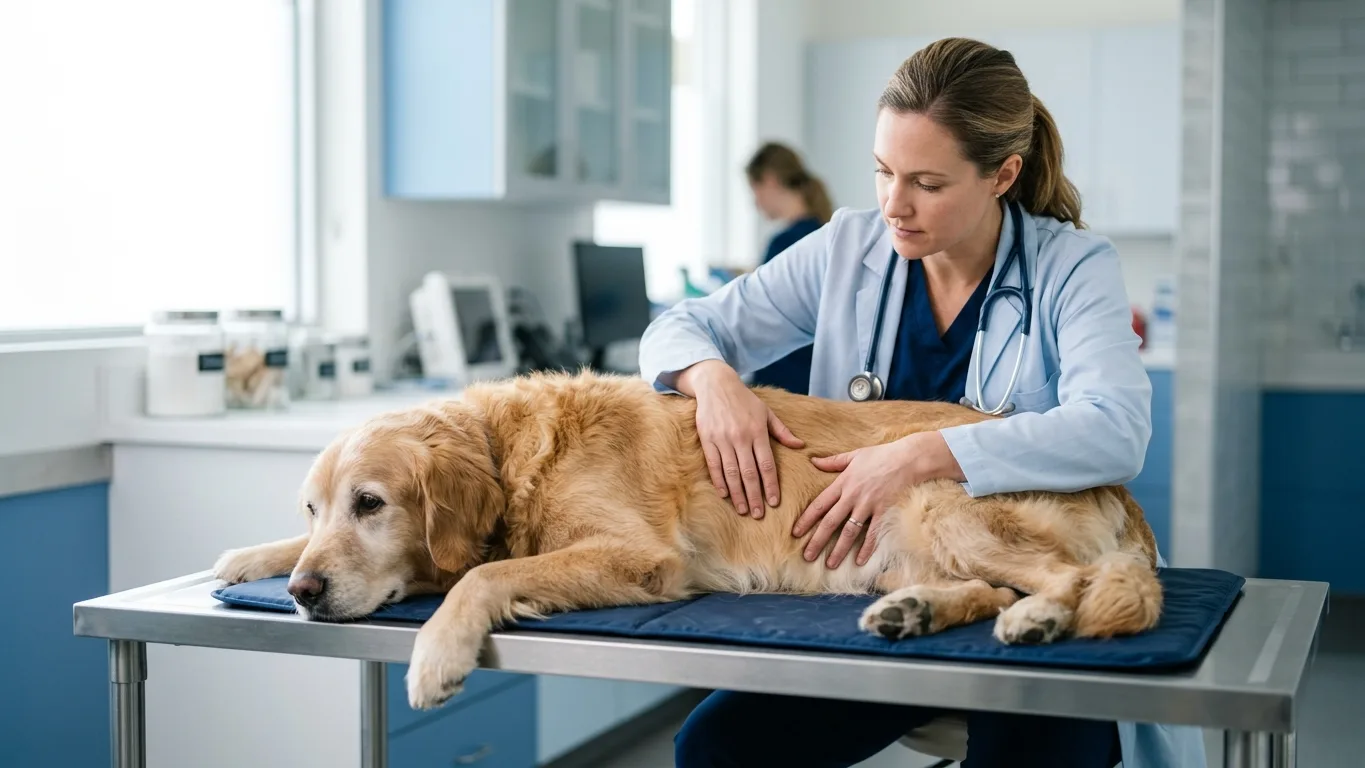
The in-person veterinary exam usually starts small—a physical exam and hydration check, sometimes bloodwork, stool testing or imaging—and scales with what it finds. Many cases settle with fluids, anti-nausea medication and a bland or prescription diet, while obstructions and toxin cases branch into more intensive care. Any medication can carry a possibility of side effects and complications, so report anything unexpected during treatment rather than adjusting doses at home.
The recovery period after a GI episode is its own assignment: reintroducing food gradually over several days, finishing prescribed courses and watching stool quality return to normal. Speed differs between individual dogs, and a relapse within days deserves another exam, not a repeat of last week’s plan. Keeping notes on what preceded the episode—new treats, scavenged trash, a diet change—often does more for prevention than anything bought over the counter.
Before your vet visit
- Log each vomit or stool with time, amount and appearance—photos help.
- List everything eaten in the past 48 hours, including treats and scavenged items.
- Check the house for chewed packages, plants or missing objects.
- Bring your dog’s medication list and vaccination record.
- Note water intake and the last normal urination.
MediIndex articles are for general information only and are not medical advice, diagnosis, or advertising. Outcomes vary by individual — consult a board-certified specialist for personal decisions.