Itchy Dog, Dirty Ears: Untangling Atopy and Ear Infections
Recurring ear trouble in dogs is often allergy in disguise, and veterinarians say the fix starts with a workup, not leftover drops.
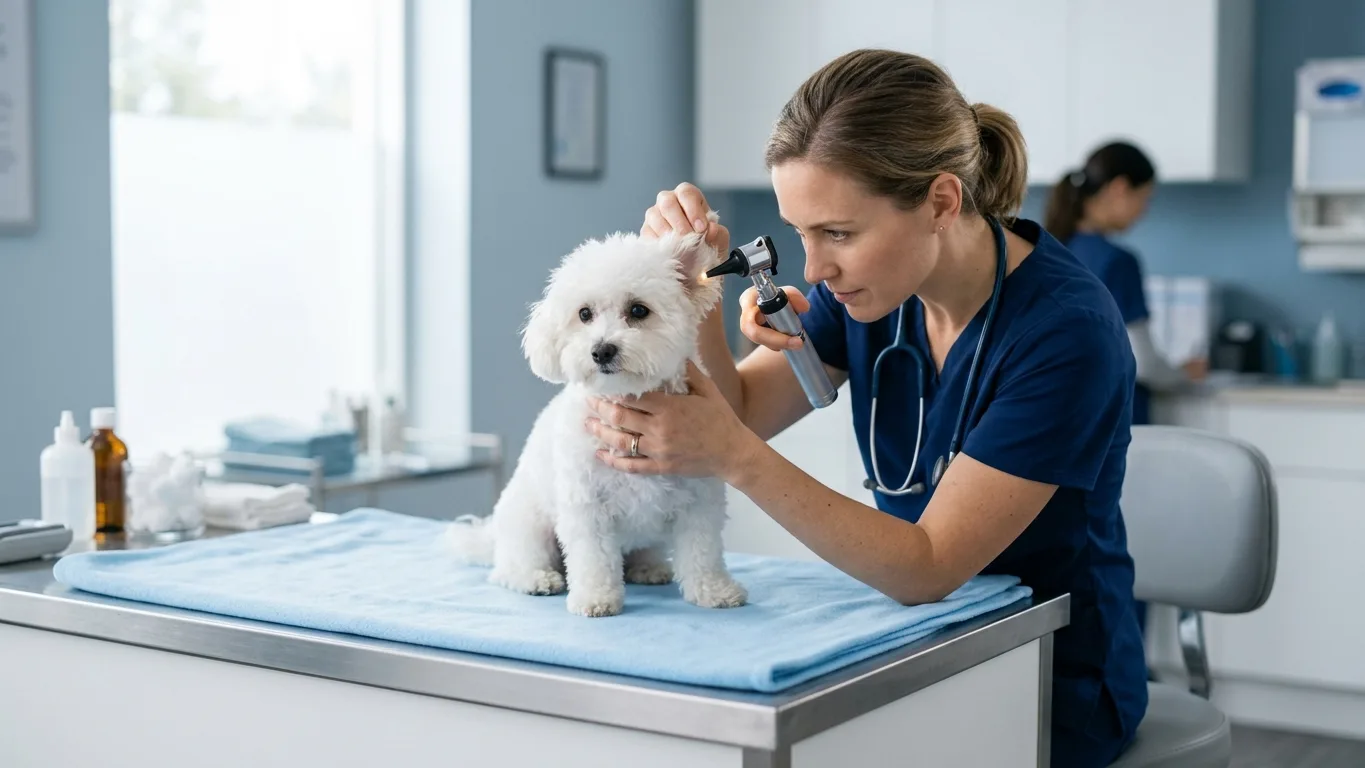
A dog that scratches through the night and shakes its head over waxy, smelly ears is telling one story, not two. The ear canal is lined with skin, so canine atopic dermatitis—an inherited tendency to react to environmental allergens—frequently shows up as otitis externa, an inflamed outer ear. Treating the ear without asking why it became inflamed is how dogs end up back at the clinic every few months.
There is no single test that stamps a dog as atopic. Veterinarians reach the diagnosis by ruling out look-alikes—fleas, food allergy, mites—and by reading what the ear itself reveals under a microscope. That process takes time and follow-up visits, but it is what separates a lasting plan from an endless cycle of flare-ups.
One disease wearing two masks
Atopic dermatitis tends to appear in young adult dogs as itching of the paws, face, armpits and belly, often worse in certain seasons. Because the ear canal shares the same reactive skin, many atopic dogs cycle through ear infections even when the rest of the coat looks calm. Severity and triggers vary widely between individuals, from pollens to house dust mites.
The inflamed canal changes its own environment—warmer, moister, waxier—and resident microbes take advantage. Bacteria and Malassezia yeast overgrow, adding infection on top of allergy. That is why an ear that improves with drops but relapses weeks later usually has an unaddressed allergic driver underneath.
How the workup actually goes
The first steps are unglamorous but essential: strict flea control for every pet in the home, then often a veterinarian-supervised elimination diet lasting about eight weeks to test for food allergy. Skipping steps muddies the answer, because several causes can itch at once. Only after the look-alikes are excluded does environmental allergy become the working diagnosis.
For the ears, cytology is the workhorse. A swab from the canal, rolled on a slide and stained, shows in minutes whether yeast, bacteria or both are overgrowing, and in what numbers. That single low-cost step steers drug choice and gets repeated at rechecks to confirm the canal has truly cleared, not just quieted down.
Why leftover drops backfire
Reaching for drops left over from a previous infection assumes this episode has the same cause, and it often does not. Yeast and bacteria call for different drugs, and some ear medications can harm hearing if the eardrum has ruptured—something only an in-person veterinary exam can check. Partial, unguided treatment can also select for hardier microbes that are tougher to clear next time.
Managed properly, most allergic dogs do well, but atopy is controlled rather than eliminated, and treatment itself can carry side effects that need monitoring. Expect a recovery-and-recheck period after each flare, and a long-term plan tuned to the individual dog. If your dog is scratching, shaking its head or producing smelly ear discharge, the sound next step is a veterinary appointment—not the medicine cabinet.
Before your vet visit
- Skip ear cleaning for a day or two beforehand so the veterinarian can sample the discharge.
- Write down when the itching started and whether it tracks with seasons.
- Bring the names of every ear drop, shampoo and medication used so far.
- Record your dog’s full diet, including treats and table food.
- Note head shaking, odor or discharge, and which ear is worse.
MediIndex articles are for general information only and are not medical advice, diagnosis, or advertising. Outcomes vary by individual — consult a board-certified specialist for personal decisions.