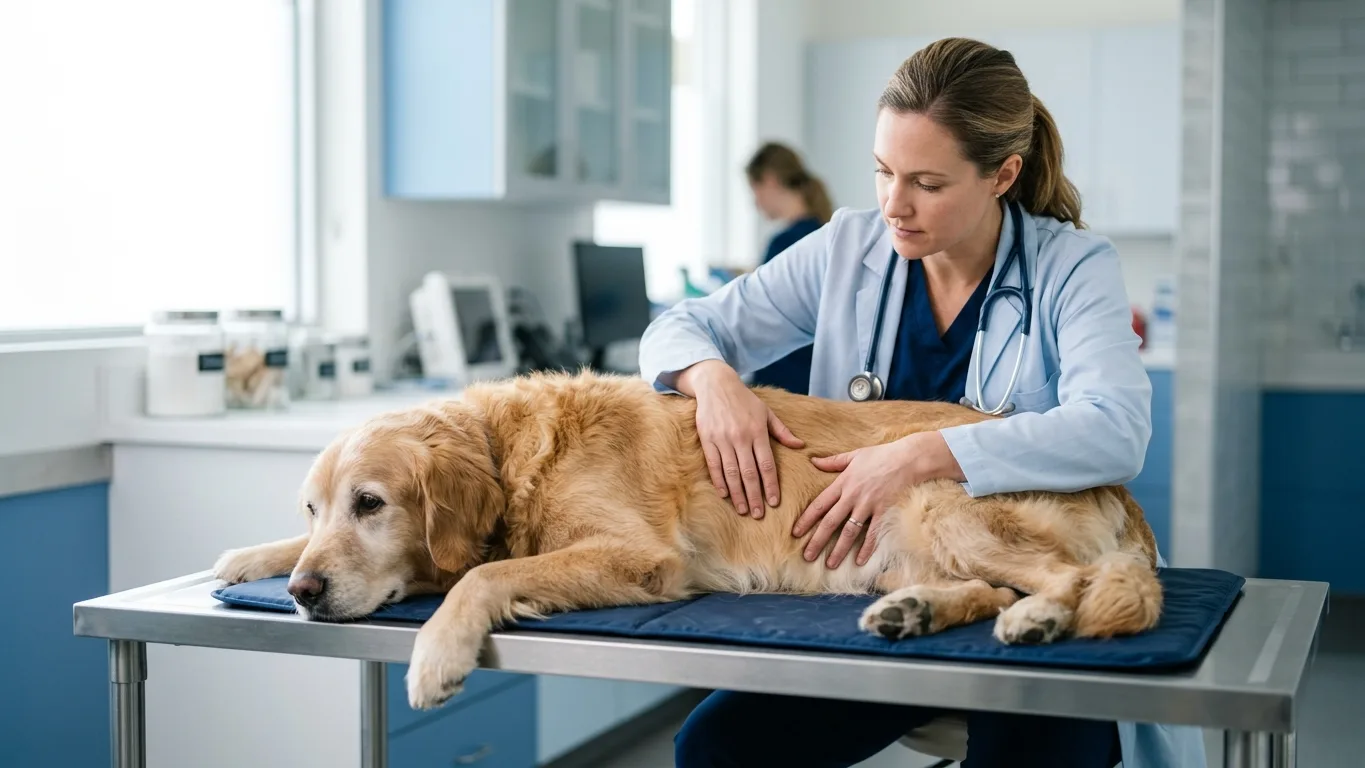
Twice a Year: Making Senior Dog Checkups a Habit
Bloodwork, X-rays and ultrasound each catch different diseases early—and aging dogs give them a shorter window to work with.
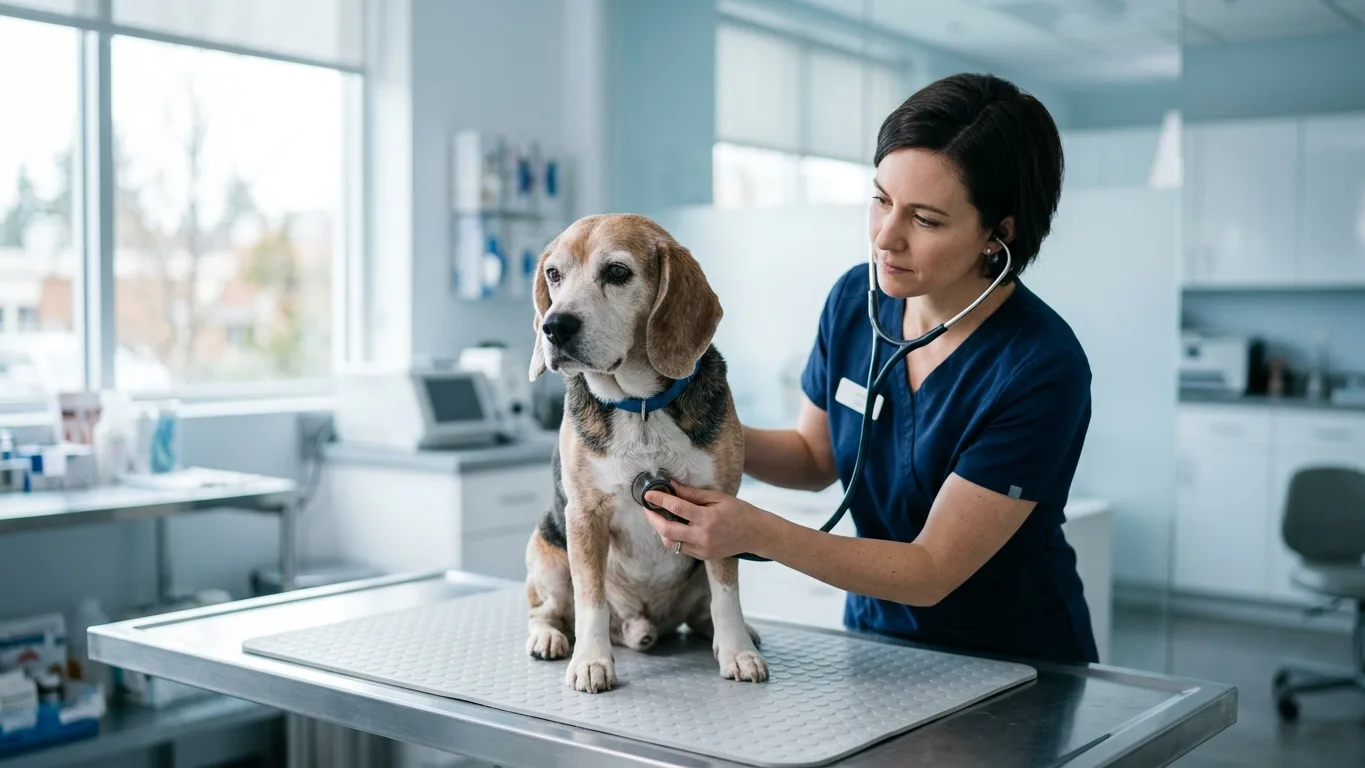
Dogs compress a human lifetime into a little over a decade, which means a single year can carry their health across a threshold. Kidney disease, heart changes, hormonal disorders and tumors all tend to build quietly in older dogs, often showing no outward sign until they are advanced. That silence is the argument for scheduled senior checkups rather than visits triggered only by symptoms.
Veterinary groups commonly suggest that dogs entering their senior years—earlier for large breeds, later for small ones—see a veterinarian about every six months. The visit is more than a vaccine stop: a hands-on exam plus bloodwork, imaging or both, chosen for that dog’s age and history. Each tool sees a different layer of the same animal.
What bloodwork catches first
Blood and urine tests read organ function: kidney and liver values, blood sugar, thyroid hormone, red and white cell counts. Trouble often shows up here before a dog looks sick—creeping kidney values or a slowing thyroid can precede visible illness by months. The numbers are most powerful in series, which is why a baseline from a healthy year makes later results easier to interpret.
Results always need context, because normal ranges are broad and individual dogs sit in different places within them. A value that is ordinary for one dog can be a warning for another, and breed and age shift expectations further. Interpreting the panel is the veterinarian’s job during an in-person visit, not a chart to decode at home.
Where X-rays and ultrasound take over
Bloodwork can be reassuringly normal while structural disease grows, and that is the gap imaging fills. Chest and abdominal X-rays show heart size, lung patterns, bone and joint changes and some masses. Arthritis and early heart enlargement, both common in seniors, are classic X-ray finds.
Ultrasound looks inside organs rather than at their outlines, picking up texture changes in the liver, spleen and kidneys, small abdominal masses and bladder stones that X-rays can miss. The two imaging tools answer different questions, so veterinarians often pair them rather than choose one. Which combination a given dog needs is a case-by-case decision made in the exam room.
Turning two visits a year into a routine
Six months in a senior dog’s life is a long time biologically, so twice-a-year visits roughly match the pace at which their health can change. Anchoring appointments to fixed points—spring and fall, or a birthday and its half-year mark—makes the habit stick. Keeping a simple home log of weight, appetite, water intake and stamina gives each visit sharper questions to start from.
Screening sometimes finds things, and that is the point—but findings can lead to follow-up tests or procedures that carry their own recovery periods and complication risks, which the veterinary team will weigh openly with the owner. Caught early, many senior conditions can be managed with medication, diet and monitoring instead of crisis care. If checkups have lapsed, or if appetite, thirst or behavior has shifted, the next step is booking a veterinary exam rather than waiting for the picture to clarify on its own.
Before the senior checkup
- Follow any fasting instructions the clinic gives for bloodwork or ultrasound.
- Bring a fresh stool or urine sample if the clinic requests one.
- Log recent changes in appetite, thirst, weight, sleep and stair-climbing.
- List all medications and supplements, including doses.
- Write down questions in advance—senior visits cover a lot of ground.
MediIndex articles are for general information only and are not medical advice, diagnosis, or advertising. Outcomes vary by individual — consult a board-certified specialist for personal decisions.